http://www.tricycle.com/insights/selective-wisdom
If we go into “something” with a preconceived idea of what it will be, we could be concealing the truth.
http://www.tricycle.com/insights/selective-wisdom
If we go into “something” with a preconceived idea of what it will be, we could be concealing the truth.
There is another subtler way to understand the trikaya, and it is this understanding that Trungpa Rinpoche taught. He did it in this way.
Stepping to the blackboard, he picked up a piece of chalk and drew this figure.

Then he stepped back and asked: “What is this a picture of?” Of course no one wanted to say the obvious, and there was an extended silence until finally some fellow raised his hand and said, “It’s a picture of a bird.”
Rinpoche replied, “It’s a picture of the sky,” and in those six words he taught the entire trikaya.
From Tricycle Magazine, Spring 2015
“The proper function of a government is to make it easy for the people to do good, and difficult for them to do evil.”
— Daniel Webster
Once again, I’m confused by the literal meaning of Jesus dying for our sins. Today’s message from the pastor told of how a man jumped on a grenade in order to save his friend in a foxhole. I get that. It’s real. But, how does Jesus being crucified translate to that? To me, it doesn’t. But, I do get the metaphor about dying to our own sins and then being reborn as a new person … and, if you will, allowing Jesus to be the way-shower for those changes. Although over-used, I do like the WWJD thinking, because I think Jesus taught three basic principles – Peace, Love, Understanding. To me, that translates into Calmness, Kindness and Acceptance. I also noticed today how the Lord’s Prayer fills those gaps. There’s no judgement there – it’s about God (not a Christian God), being good NOW (on earth as it is in heaven), forgiveness and avoiding suffering (had to get a little Buddhism in there) – “deliver us from evil.”
http://www.tricycle.com/blog/china-asserts-control-over-dalai-lama-lineage
This is interesting from several vantage points. What is the ulterior motive? If China doesn’t believe in the religion, then what is the need to control the next Dalai Lama? Could it be more than just political? Maybe – think of a meditative nation used for more dark purposes? We know meditation can change and group meditations on the same thoughts may have even more power … so is it possible that China is simply allotting resources to capture meditative powers in order to use them for its gain? Ironic? Subversive?
Easier said than done to train your mind to desire the silence.
http://www.tricycle.com/blog/fear-silence
http://www.tricycle.com/dharma-talk/breaking-habit-selfishness
Obviously easier said than done, and maybe not something that can be done all the time in our world. But, good practice for daily mediations and life living.
http://www.tricycle.com/practice/way-ryokan
Do we destroy or do we sustain the world? Of all the current worlds and previous worlds, I wonder where we stand? In some ways, is this God’s little game – his way to experience time?
“If we want to succeed in life and bring about a more peaceful world, we must learn to control our emotions and not to be affected by a moment of anger.”
— Master Hsing Yun, “Don’t Get Mad, Don’t Get Even”
http://www.tricycle.com/meditation-buddhist-practices/calm-abiding-shamatha/dont-get-mad-dont-get-even
I know that when I get provoked, I find it very hard to not want to “get back” at that person. Lately, I’ve tried to just not send that note with the scathing remark. Let it sit, then go back to it and remove it. Granted, the angry energy was within me, but I did not transmit it out into the universe to to other people. Maybe that’s a good first step. Ideally, maybe, I can get to that stage where I can ignore or accept those moments.
“There is no denying that our happiness is inextricably bound up with the happiness of others. There is no denying that if society suffers, we ourselves suffer. Nor is there any denying that the more our hearts and minds are afflicted with ill-will, the more miserable we become. Thus we can reject everything else: religion, ideology, all received wisdom. But we cannot escape the necessity of love and compassion.” The Dalai Lama
“Attend when you want to; that’s Swigness; the flow into everything and nothingness, whatever you need at the moment you need it; nothing more, nothing less, unless you require more or less of whatever you need.”
I know that there will be those that will point out that there are those in poverty that take advantage of the system; or that for whatever reason they deserve to be there. But, unless we’ve been in their shoes, we don’t really know what causes this or what their mentality is. We say we give everyone the chance to succeed, but is that true? Let’s not take an extreme attitude on this – yes, there is corruption and loopholes, and yes, there are those that are invalids or in positions where they cannot take care of themselves at all. Then, there’s the remaining majority that most likely need our help, too.
| Poverty still persists today because we have lost the moral perspective as the polestar of public policy. Instead we follow the law of the jungle, content to abandon the poor to their own devices, demanding that they marshal resources they simply do not possess. And the reason we have moved in this direction, drifting away from the high ideals of the Great Society era, is because the vision and values of corporate capitalism have gained ascendency over those of human solidarity and mutual responsibility. To eliminate poverty, this trend must be reversed. The individualistic vision must give way to one that stresses our essential unity; competition must be balanced by mutual assistance and respect. |
– Ven. Bhikkhu Bodhi, “The Price of Dignity”
| Spiritual experience and goods can certainly reinforce a consuming mind, too, and it is no surprise to see this happening in a consumer culture. Marketers are successfully targeting spiritual consumers as a market niche and figuring out exactly what fulfills their self-centered yearnings. How many of these products are necessary for spiritual enlightenment? Probably not one. |
– Stephanie Kaza, Ego in the Shopping Cart
I saw this today on Tricycle and two things come to mind:
1. I believe people can be helped by others, although the final step is their own.
2. Why is it I try to find fault in someone else’s thoughts?
http://www.nytimes.com/2013/09/20/world/europe/pope-bluntly-faults-churchs-focus-on-gays-and-abortion.html?pagewanted=2&_r=1&emc=edit_na_20130919&pagewanted=all&
In times where extremes are the norm (especially in politics), it’s refreshing to see areas that were once thought to be strongholds to be tearing down those walls.
Another great gesture.
http://www.washingtonpost.com/blogs/worldviews/wp/2013/09/04/irans-president-just-wished-all-jews-a-happy-rosh-hashanah-on-twitter/
I am sure that the Pope’s decision on “who am I to judge” about homosexuality took great courage. I admire his decision and hope that with this wall having been breached, that others too, will follow suit.
I respect the priest celibacy angle, since it’s truly an accepting position. I also can accept, within the confines of Catholicism that the acts themselves are not acceptable – meaning sex is intended to pro-create, as I understand this, having never been a Catholic myself.
They key, though, was his “who am I to judge” stance and I see this a truly a great step to be taken by a Pope. Thank you!
Usually we are in a stalemate with our world: “Is he going to say he is sorry to me first, or am I going to apologize to him first?” But in becoming a bodhisattva we break that barrier: we do not wait for the
other person to make the first move; we have decided to do it ourselves.
-Chogyam Trungpa Rinpoche, The Bodhisattva Vow: Eight Views
http://www.tricycle.com/dharma-talk/the-bodhisattva-vow-eight-views
![]() |
Just as a person mired in quicksand cannot help another until he has himself reached firm ground, our ability to help others depends chiefly on keeping our own balance. |
![]() |
– Andrew Olendzki, “Keep Your Balance”
http://www.tricycle.com/thus-have-i-heard/keep-your-balance
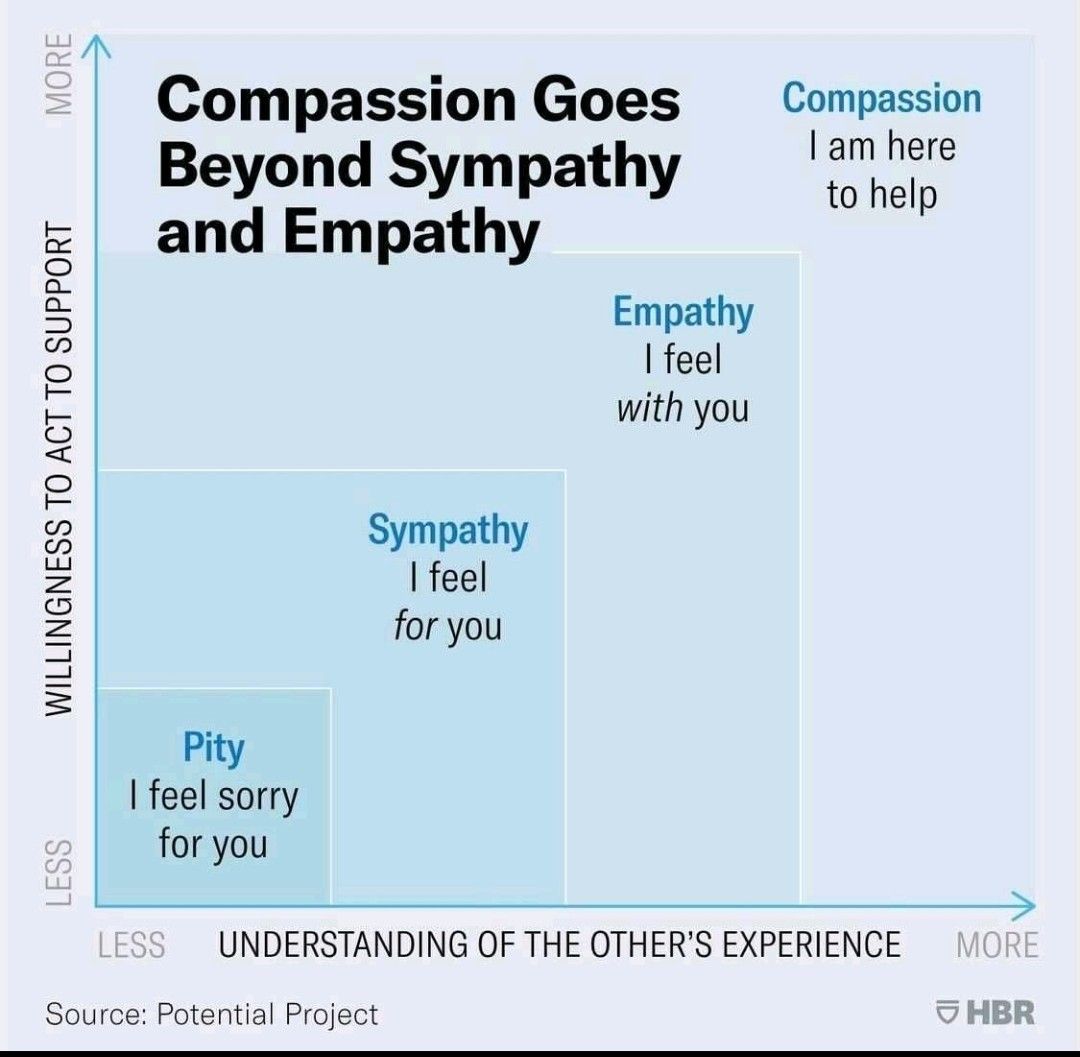
Another one of those articles that makes me realize just how judgmental we are by nature. Even when we are being non-judgmental, we can have underlying judgmental motives. Here, in this article from Tricycle, compassion is thrown into the mix. Do we develop compassion out of trying to make ourselves feel better about ourselves – “glad we’re not them”? Or, can we truly feel their pain?
“Compassion is not condescension, but a leveling of the playing field, a recognition of yourself in others and an acceptance that their stress is your stress, that their happiness is your own. The gulf between us all is imaginary, born of insecurity and fear.” — Stephen Schettini, “What to Expect When You’re Reflecting”
http://www.tricycle.com/insights/what-expect-when-youre-reflecting
Unity bonding cannot just happen with anyone anywhere anytime; rather it happens with everyone everywhere all the time.
“There is no denying that consideration of others is worthwhile. There is no denying that our happiness is inextricably bound up with the happiness of others. There is no denying that if society suffers, we ourselves suffer. Nor is there any denying that the more our hearts and minds are afflicted with ill-will, the more miserable we become.”
“The Buddha didn’t talk about Buddhism. He was concerned, simply, with the truth, the truth of suffering, the truth of the end of suffering; and that, I’d submit, is a good thing for anybody to learn.”
– Peter Doobinin, “Tough Lovingkindness”
Couldn’t we very easily switch the name Buddha to Jesus and Buddhism to Christianity. Therefore, another opportunity to accept that all religions are pure at their pre-organizational conceptions.
\
To further elaborate on the “Translation and Time” post – is SILENCE a better way to communicate than verbally?
No, I was not intending this to be a Koan.
Metaphorically, is this what reincarnation (both Buddha’s major Karma paradigm and the Hindu Sacred Cow) comes down to?
Treat all living conscious life as if it were a rebirth of another. It could be you someday.
Weve mentioned before about Buddhisms focus on truth as opposed to metaphor. Not that metaphors cant be the truth, theyre just up for interpretation.
Of course, there is the whole reincarnation aspect, but Im not ready to call that a metaphor just yet.
However, both metaphors and truth face the same challenges in the confines of standard religions: Translation & Time.
Misinterpreting or taking what you want from scripture/history/truth crosses all religions. Those were originally written in a different time, in different languages (many times), and a different set of social-political and even moral values.
Therefore, misinterpretation becomes misleading. It doesnt mean we cant still find value from these words. On the contrary. But, hopefully, take the purest meanings love, peace, acceptance.
As has been said so many times before, thoughts of those epiphanies we have cannot be put into words. And, words cannot describe those epiphanies even when written. But, we try anyway many times in the form of stories, parables, metaphors. And, thats the danger and the beauty. Its where poetry lives.
Lets just not take it literally.
Heres a great article:
http://www.tricycle.com/blog/lost-quotation-partial-readings-kalama-sutta
From another article in the same issue:
This leads on to the misconception that the Buddha was a philosopher, in the sense in which that term has been used in the Western tradition. I am not the only person to have insisted that he makes it quite plain that his interest was purely pragmatic: he intended to help people and only attempted to teach the truth to the extent that it was helpful; further speculation he tended to discourage. At the same time, one must remember that, as [the philosopher] Paul Williams has written, the teachings of the Buddha are held by the Buddhist tradition to work because they are factually true (not true because they work).
http://www.tricycle.com/feature/what-buddha-thought?page=0,0
In college, one of my best friends (Rick Ramell) and I took a class from Dr. Soo Bach Choi. At the beginning of the first class, he asked this question.
Recently, I was listening to the Power of Myth with Bill Moyers and Joseph Campbell. This is what JC said about what Myth is:
“Myths are clues to the experience of life.”
Joseph Campbell once said: “Put yourself in situations to invoke your higher nature.”
To me, this means that you’re not copping out when you decide to be non confrontational, or if you decide that being around a certain person can be avoided, or not exposing yourself to an awkward situation.
In some ways, this is very Buddhistic – Understand that there is pain, and find ways to avoid that pain.